
Let’s be honest: stress has become the background noise of modern life. That tight chest on Sunday night, the racing mind at 2 a.m., the short fuse with someone you love over something trivial. You’re not broken, and you don’t need a complete life overhaul to feel better.
Learning how to reduce daily stress starts with understanding that your body reacts before your mind catches up.
The truth is, reducing daily stress isn’t about eliminating every pressure. It’s about building a toolkit of small, repeatable habits that bring your nervous system back to baseline. Per the American Psychological Association’s 2024 Stress in America survey, nearly 60% of adults report that daily stress significantly impacts their physical health.
And the best part? Most effective strategies take five to ten minutes, not hours. Let’s get practical.
Why Daily Stress Feels So Hard to Control
Your body doesn’t distinguish between physical danger and psychological pressure. A deadline, a difficult conversation, or even checking a stressful email triggers the same fight-or-flight response as running from a predator. That means you can be sitting safely at a desk and still feel flooded with cortisol and adrenaline.
The problem is that modern life keeps your nervous system in a state of constant low-grade activation. Your stress response evolved for short bursts of danger, not for 14-hour workdays, constant notifications, and never-ending to-do lists. Your nervous system is doing exactly what it evolved to do, it just hasn’t caught up to modern life yet.
What this means practically is that stress isn’t a character flaw. It’s a physiological response you can work with directly. That’s good news.
You don’t have to solve every problem in your life to feel calmer. You just need to signal safety to your body, consistently.
As of 2026, stress research increasingly focuses on nervous system regulation rather than cognitive reframing alone. The shift matters because it validates what many people already suspect: you can’t think your way out of a physiological state. You have to change the state itself.
Quick Answer
To reduce daily stress, regulate your nervous system in the moment rather than fixing everything at once. Use extended exhale breathing, cold water on your face, and progressive muscle relaxation for immediate relief. For lasting change, cut caffeine after noon, walk 10 minutes daily, and set a consistent end-of-work boundary.
Most people notice improvement within 7 to 14 days.
The 3 Fastest Ways to Calm Your Nervous System Right Now
When stress hits, you don’t want a 20-minute guided meditation. You want something that works within minutes. These three techniques are backed by research and practical experience, and they all target the physiological stress response directly.
1. Extended Exhale Breathing
This is the single most effective instant tool available. The mechanism is straightforward: lengthening your exhale stimulates the vagus nerve, which activates your parasympathetic nervous system, the rest-and-digest state. Your heart rate slows, blood pressure drops, and cortisol levels begin to decrease.
- Inhale through your nose for 4 counts
- Exhale slowly through your mouth for 6 to 8 counts
- Repeat for 3 to 5 minutes
It sounds too simple to work. But you’re overriding the emergency signal with a physiological command to calm down. The extended exhale tells your brain that you’re safe, and your body responds accordingly.
For best results, practice this technique daily, not just during stressful moments. Like any skill, it works better when your nervous system recognizes the pattern. Five minutes in the morning and five minutes before bed builds the pathway so it’s accessible when you need it most.
2. Cold Water on the Face
The mammalian dive reflex triggers an immediate slowdown of your heart rate when cold water hits your face. This reflex is hardwired into your nervous system, making it one of the fastest physiological resets available.
- Splash cold water on your face for 20 to 30 seconds
- Even better, hold a cold pack to your cheeks and eyes briefly
This works because it forces your body to prioritize a survival response over the stress response. Your heart rate drops, blood vessels in your face constrict, and your nervous system recalibrates. It costs nothing and requires no preparation.
The effect is immediate but temporary. Use it when you’re overwhelmed, before a difficult conversation, or when you feel anxiety spiraling upward. It’s not a long-term solution, but it will get you through the next five minutes without making things worse.
3. Progressive Muscle Relaxation
Many people hold stress in their shoulders, jaw, and stomach without noticing. Progressive muscle relaxation works by making you aware of the tension and deliberately releasing it. The technique involves tensing and relaxing different muscle groups in sequence.
- Starting with your toes, tense each muscle group for 5 seconds
- Release and notice the contrast for 10 seconds
- Move up through your legs, torso, arms, hands, shoulders, jaw, and forehead
A full pass takes about 10 minutes, but even a shortened version from shoulders to jaw provides relief fast. The key is noticing the difference between tension and release. Most people don’t realize how much they’re holding until they let go.
Small Daily Habits That Stop Stress Before It Builds Up
The techniques above handle acute moments. But the bigger win is preventing stress from accumulating in the first place. These habits move the needle most, and they’re all supported by research.
Caffeine: The Hidden Amplifier
Caffeine blocks the chemical that makes you feel sleepy, but it also ramps up adrenaline and cortisol. For some people, that’s manageable. For a significant portion of the population, it means a constant low-grade state of agitation that they mistake for “just being naturally anxious.”
- If you’re stressed daily, try reducing caffeine intake by half for one week
- Cut it off entirely after noon to protect sleep
- If you notice a difference, you’ve found a contributing factor
The timeline matters. Give yourself a full week at the reduced level before judging the effect. Caffeine sensitivity varies widely, and withdrawal symptoms in the first few days can mask the benefits.
Day four or five is when you’ll know if this is a factor for you.
The 10-Minute Walk That Science Keeps Backing
Moderate walking, the kind where you can still hold a conversation, has been repeatedly shown to lower cortisol levels. But the timing matters more than people think. Walking outside between midday and early afternoon helps break the stress curve before it peaks.
Ten minutes after lunch does more for your afternoon stress levels than a 60-minute gym session later in the day. It’s not about intensity. It’s about breaking the stress cycle at the right moment.
Your cortisol levels naturally spike in the morning and taper through the day. A short walk interrupts that pattern before it builds momentum.
If you can’t walk outside, a treadmill or indoor loop still helps. The key is consistent movement at a gentle pace. Your nervous system responds to the rhythm, not the scenery.
Setting an “End of Work” Boundary
For anyone with a job that extends past 5 p.m., the line between working and not working has blurred. The result is that your brain never fully disengages, and stress never gets a chance to reset.
- Pick a daily time when you stop checking email or work messages
- Physically close the laptop or set your phone in another room
- Log out of work apps, not just close the tab
You don’t need a rigid boundary. You just need a consistent one. Your nervous system learns to expect relief at that time, which makes the whole day feel more manageable.
The predictability itself reduces stress because your body knows when it can unwind.
Research from the National Institutes of Health confirms that constant work connectivity increases burnout risk. The solution isn’t working fewer hours. It’s creating clear psychological separation between work and recovery time.
Scheduling “Worry Time” to Contain Anxious Thoughts
This is one of the most underused cognitive techniques for daily stress. The idea is simple: instead of letting anxious thoughts interrupt you all day, you contain them into a specific time slot.
- Pick a daily time, usually 5 to 6 p.m., and set a timer for 10 minutes
- During that time, write down every worry on your mind, no censoring
- Identify what’s within your control versus what isn’t
- For controllable items, write one small next step, even if it’s “think about this tomorrow”
- Close the notebook and move on with your evening
The goal isn’t to suppress worry. It’s to give it an appropriate space so it doesn’t take over your entire day. Most people find it takes about two weeks for the habit to really stick.
Your brain learns that concerns will be addressed, so it doesn’t need to keep reminding you.
The Problem with Popular Stress Advice (and What to Do Instead)
There’s a lot of questionable advice floating around, and some of it can actually make things worse. Understanding what doesn’t work is just as important as knowing what does.
| Popular Advice | The Reality |
|---|---|
| “Just meditate 20 minutes daily” | Great in theory, but unrealistic for many adults. Five minutes of intentional breathing is more sustainable and still effective. |
| “Do intense exercise to burn off stress” | High-intensity training raises cortisol acutely. For chronically stressed people, it can backfire. Gentle movement is often better. |
| “Stop worrying, it doesn’t help” | This creates guilt on top of anxiety. The better approach is containing worry, not shaming yourself for having it. |
| “Eliminate all stress from your life” | Impossible and unhealthy. A certain level of stress gives us energy and focus. The goal is managing the load, not avoiding it entirely. |
The pattern here is that sustainable beats perfect. The best stress reduction strategy is the one you’ll actually do consistently. A five-minute breathing practice you maintain beats a 30-minute meditation you quit after three days.
Why “Just Relax” Doesn’t Work
Telling a stressed person to relax is like telling a drowning person to swim. It assumes they have a skill they don’t yet possess. Stress management is a learned skill, not a personality trait.
You need specific, repeatable techniques to interrupt the stress response, not vague instructions to calm down.
Many people also struggle because they don’t recognize their stress signals until they’re already overwhelmed. By the time you notice the tight shoulders and racing heart, your nervous system has been ramping up for hours. This is why daily prevention habits matter more than crisis interventions.
When High-Intensity Exercise Hurts
Exercise is generally good for stress. But the timing and intensity matter significantly. For someone already running on high cortisol, a grueling HIIT workout adds another stressor rather than relieving one.
The result might feel like a release, but it can deepen the exhaustion cycle.
Moderate movement, like walking, swimming, or gentle yoga, gives your nervous system the benefits of exercise without the additional strain. Save the intense workouts for days when your baseline stress is lower. Listen to your body’s signals rather than forcing a workout that leaves you more depleted.
When to Seek Professional Help for Stress and Anxiety
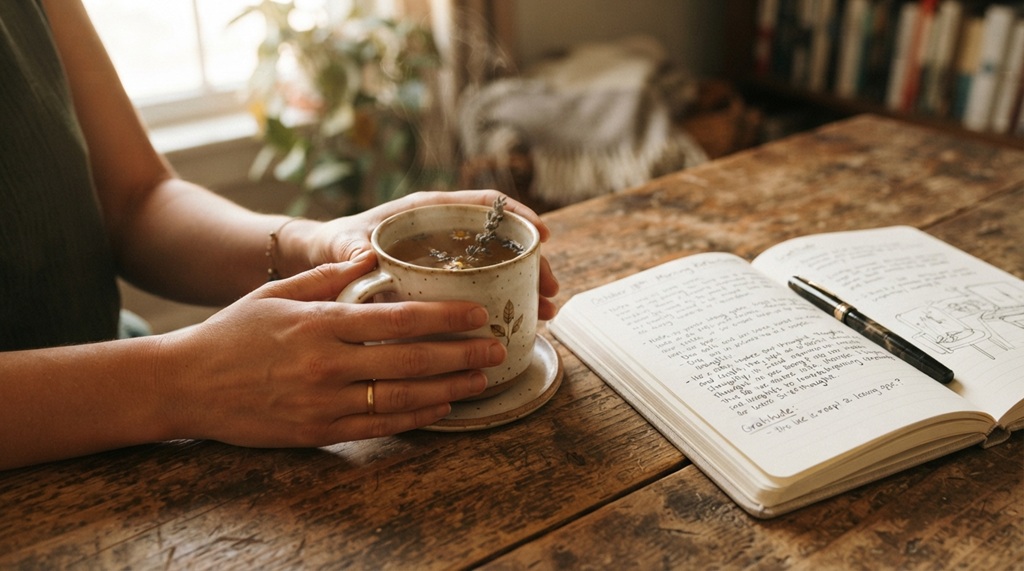
Daily stress and clinical anxiety exist on different ends of the same spectrum. The distinction matters because self-management techniques have their limits. If stress has crossed into territory where you can’t function, work, or maintain relationships, that’s the signal to get professional support.
You should consider seeking help if:
- You experience panic attacks or constant dread that doesn’t lift
- Stress interferes with sleep for more than two weeks
- You’ve withdrawn from activities you normally enjoy
- Physical symptoms like chest pain or digestive issues persist
- You’re using alcohol or substances to cope more than twice a week
Therapy approaches like cognitive behavioral therapy (CBT) have strong evidence for stress and anxiety management. The American Psychological Association’s research indicates that CBT helps people identify thought patterns that amplify stress and replace them with more realistic assessments. Most people see meaningful improvement within 8 to 12 sessions.
Primary care physicians can also screen for stress-related health impacts and rule out underlying conditions. Blood pressure, thyroid function, and vitamin deficiencies can all mimic or worsen anxiety symptoms. A medical checkup gives you a clean baseline before you invest time in psychological strategies.
Let’s be clear about the relationship between self-help and professional care. Self-management techniques are not a replacement for therapy, they’re a complement. The breathing exercises and daily habits you’ve learned here can support professional treatment, but they shouldn’t delay getting help when you need it.
Frequently Asked Questions
Can stress be completely eliminated from daily life?
No, and you wouldn’t want it to be. Stress provides the energy and focus you need to meet deadlines, handle challenges, and stay motivated. The goal is managing your stress load so it doesn’t overwhelm your system.
Think of it like a pressure gauge: you want it in a healthy range, not at zero.
How long does it take to see results from stress reduction techniques?
Immediate techniques like extended exhale breathing work within minutes. Habit changes like reducing caffeine or setting boundaries typically show noticeable improvement within 7 to 14 days. The key is consistency.
Sporadic practice gives sporadic results. Daily practice rewires your nervous system over time.
Is exercise helpful or harmful for stress?
Moderate exercise is excellent for reducing daily stress. The intensity matters enormously. High-intensity training raises cortisol acutely, which can backfire for chronically stressed people.
Gentle movement like walking, swimming, or yoga gives you the benefits without the additional strain. Save intense workouts for days when your baseline stress is lower.
Does diet affect stress levels?
Yes, significantly. Caffeine and refined sugar amplify the stress response by spiking adrenaline and causing blood sugar fluctuations. Prioritizing protein, vegetables, and regular meals stabilizes blood sugar, which supports a steadier mood.
A one-week caffeine reduction trial is the fastest way to assess your sensitivity.
Should I take supplements for stress?
Some people find magnesium, ashwagandha, or L-theanine helpful, but they aren’t substitutes for foundational habits. Sleep, movement, boundaries, and breathing techniques should come first. If you’re considering any supplement, especially if you take medication, consult a healthcare provider first to avoid interactions.
A Simple Plan to Start Reducing Stress This Week
You don’t need to implement everything at once. Overwhelming yourself with a dozen new habits creates exactly the stress you’re trying to reduce. Instead, start with a minimal viable plan that builds momentum.
Week one focuses on one immediate technique and one habit change:
- Commit to 3 minutes of extended exhale breathing every morning
- Pick one habit from the daily section: caffeine reduction, a lunch walk, or an end-of-work boundary
- Do those two things consistently for seven days
This approach works because it respects your existing capacity. One small win builds confidence. Confidence makes the next change easier.
By week two, you can add worry time or progressive muscle relaxation.
Track your baseline before you start.
Rate your stress on a 1 to 10 scale each evening for the first week. Note your sleep quality and any physical symptoms, like jaw tension or headaches. This gives you concrete data to compare against in week two.
Most people notice their average stress score drops by 1 to 2 points within 14 days of consistent practice.
Expect some resistance at first.
Your nervous system is used to running on high alert. New habits feel awkward because they’re unfamiliar. That’s normal.
The discomfort fades around day five or six. By day ten, the practice starts to feel like a relief rather than a chore.
If you miss a day, don’t double up or restart.
Just resume the next day. Consistency over the long term matters far more than perfection in the short term. The goal is building a sustainable relationship with your nervous system, not adding another thing to feel guilty about.
The science here is genuinely encouraging. Your brain and body are designed for adaptation. Small, repeated signals of safety teach your nervous system that you’re not in constant danger.
With time and consistency, what feels like effort now becomes your new baseline. And that baseline is where real stress relief happens.