Wake Up Refreshed: 10 Natural Sleep Boosters
You’ve tried the obvious things. You’ve dimmed the lights, put the phone across the room, and sworn off coffee after dinner. And yet, here you are at 2 AM, staring at the ceiling while your brain rehearses every conversation from the last three years.
Figuring out how to improve sleep quality naturally isn’t about one magic trick. It’s about understanding the biological levers your body actually responds to, then using them consistently.
According to the National Institutes of Health, roughly 30% of adults report some degree of insomnia symptoms, yet most never touch the physiological switches that control sleep. The good news? Your body comes with a built-in sleep system, and once you learn how to work with it, you don’t need pills, gadgets, or expensive subscriptions.
Let’s walk through what actually moves the needle.
Why Most Natural Sleep Advice Fails (And What Actually Works)
Most sleep articles hand you the same generic list: avoid screens, try chamomile tea, keep a regular schedule. That’s not wrong, but it’s painfully incomplete. The real culprits behind poor sleep are buried deeper, in your circadian rhythm, your core body temperature, and your brain’s anxiety response to being awake.
Here’s what’s actually happening under the hood.
Your circadian rhythm is your internal clock. It runs on a roughly 24-hour cycle, responding primarily to light exposure. When morning light hits your retinas, your brain suppresses melatonin, the drowsy hormone, and raises cortisol to wake you up. As daylight fades, melatonin rises again, and your body temperature begins to drop in preparation for sleep.
That temperature drop is critical. Your core body temperature needs to fall by about 1 to 2 degrees Fahrenheit for you to initiate sleep and reach deep REM stages. If your bedroom is too warm, or if you’ve just finished an intense workout, your body can’t cool down enough, and you’ll toss and turn instead of sleeping.
The third overlooked factor is sleep anxiety. When you wake up at 3 AM and calculate, “I only have 4 hours left,” your brain releases stress hormones that keep you awake. It becomes a feedback loop: you stress about not sleeping, which makes you not sleep, which makes you stress more.
The fix isn’t a complicated routine. It’s addressing these three levers directly, and we’ll show you exactly how.
The Biological Levers You Can Control Tonight
Let’s get concrete about the physiological switches you can actually flip, starting tonight, without buying anything or overhauling your entire life.
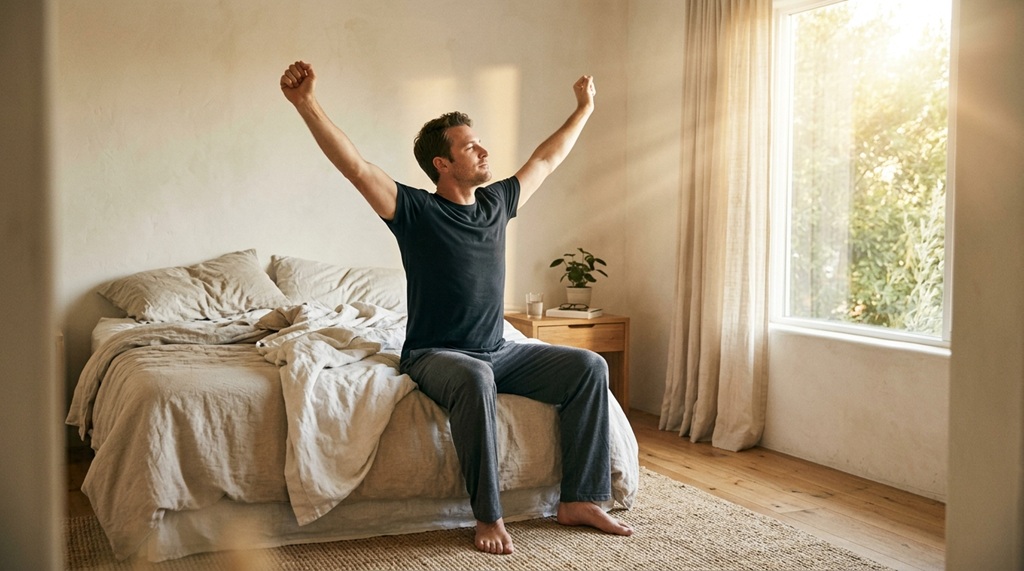
Morning Light Exposure
This is arguably the highest-impact habit you can adopt, yet almost nobody does it correctly.
- The recommendation: Get 10 to 15 minutes of natural sunlight within 1 hour of waking.
- The catch: It must be outdoors. Window glass filters out the specific blue-rich wavelengths your brain needs. Indoor lighting is roughly 20 times dimmer than even an overcast sky.
- The mechanism: Morning light anchors your circadian rhythm, signaling your brain to start the 14-to-16-hour countdown to melatonin release.
If you live in northern latitudes without reliable winter sunlight, a light therapy lamp (10,000 lux) placed about 12 inches away for 20 to 30 minutes can serve the same purpose.
Core Body Temperature Regulation
Your body is programmed to sleep when it gets cooler. You can hijack that system to your advantage.
- The room temperature rule: Keep your bedroom between 65°F and 68°F (18°C to 20°C). The National Sleep Foundation recommends this range because it’s cold enough to facilitate natural cooling but not so cold that it causes shivering or discomfort.
- The warm shower trick: Take a warm shower or bath 90 minutes before bed. This sounds counterintuitive, but here’s the logic: raising your body temperature artificially causes a rapid drop afterward, mimicking the natural temperature decline that initiates sleep onset.
Caffeine Cutoff and Hidden Sources
Caffeine has a half-life of about 5 to 6 hours, meaning that after 9 hours, roughly 12% of a cup of coffee is still circulating in your system. That’s enough to disrupt sleep architecture without you feeling “tired.”
- The hard rule: Stop consuming caffeine by noon, not 4 PM or 6 PM. Afternoon coffee is a legitimate sleep disruptor.
- Hidden sources: Green tea, dark chocolate, some herbal teas marketed as “relaxing,” and even decaf coffee (which still contains about 15% of normal caffeine levels) can sneak past your cutoff.
Alcohol and REM Suppression
A nightcap feels relaxing, but alcohol is metabolized into sugars that disrupt the second half of your sleep cycle. It suppresses REM sleep, causes night wakings, and often triggers 3 AM insomnia. If you drink, finish at least 3 hours before bed, and keep it light.
The 7-Day Natural Reset Plan
Here’s a practical, realistic setup you can run for the next week. Don’t try to change everything at once. Pick the two or three pieces that feel most doable, and focus there.
Day 1 through 7: The Daily Protocol
Morning block (within 1 hour of waking):
- Get 10 to 15 minutes of outdoor sunlight. No sunglasses.
- Drink water before coffee. Dehydration makes daytime fatigue worse.
Afternoon block (after 12 PM):
- Zero caffeine from this point forward.
- If you nap, keep it under 20 minutes and before 3 PM.
Evening block (post-dinner):
- Finish heavy meals at least 3 hours before bed.
- Start your wind-down ritual 30 to 45 minutes before your intended bedtime.
The 3-Part Wind-Down
This is the part where most routines fall apart, so keep it simple and genuinely boring.
- Physical wind-down (10 minutes): Wash dishes, fold laundry, lay out tomorrow’s clothes. This keeps your hands busy and lets your mind drift away from work.
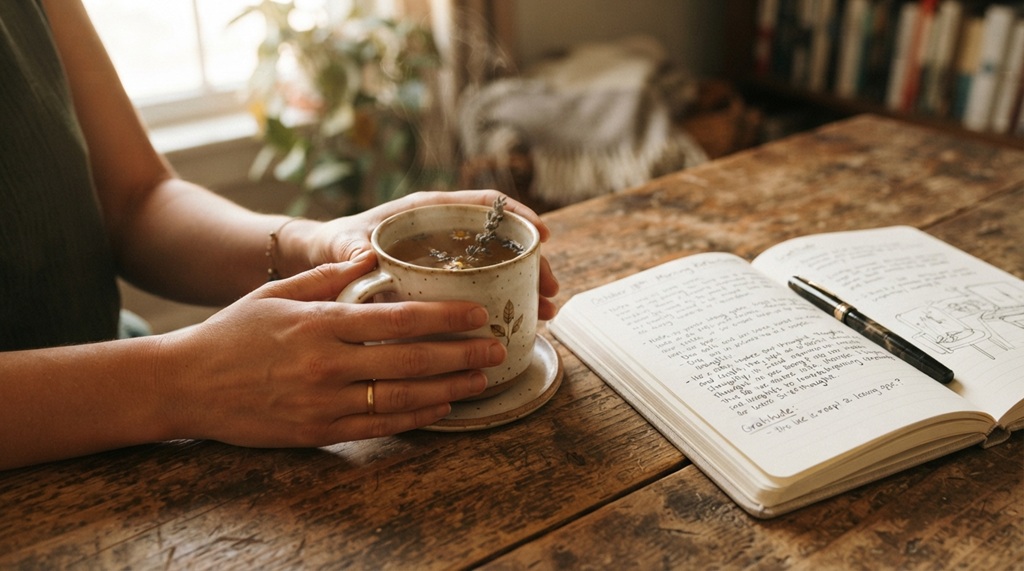
- Brain dump (10 minutes): Write down every worry, task, or thought circling in your head. Get it out of your brain and onto paper. This reduces mental rehearsal during the night.
- Boring activity (10 minutes): Read fiction, do a puzzle, stretch, or organize a drawer. Under warm, dim light. No screens unless absolutely necessary, and never short-form video.
Sleep Environment Fixes
- Remove the clock. Turn your alarm away from you or place it across the room. Clock-watching spikes cortisol, making it harder to fall back asleep after night wakings.
- Mask the noise. Use a white noise machine, a fan, or brown noise (lower in pitch) to create a consistent acoustic backdrop that covers sudden sounds like car horns or doors slamming.
- Cool the room. Set the thermostat to 65°F to 68°F. If that’s too cold for you, add a blanket you can easily kick off mid-sleep.
What Results to Expect
Don’t expect a miracle on night one. Your body needs time to recalibrate.
- Nights 1 and 2: Likely feel awkward. You might fall asleep later than usual or wake more often.
- Nights 3 and 4: You should notice slightly faster sleep onset and fewer mid-sleep wakings.
- Nights 5 through 7: Most people report feeling sleepier earlier, waking with more energy, and no longer needing to “force” themselves to bed.
If you see zero improvement after 10 consistent nights, either you’re missing part of the protocol (like the sunlight), or something else is going on medically.
Common Sleep Mistakes You’re Probably Making
Even with good intentions, these subtle habits can silently undermine your sleep.
Clock-Watching and Reverse Anxiety
Waking up at 3 AM is normal. It’s the checking that ruins everything. When you glance at the clock and compute your remaining hours, your brain releases cortisol, the stress hormone, which activates your fight-or-flight response.
The result? You’re now more alert, not less.
The fix: Turn the clock away. Hide your phone under your pillow or leave it in another room. If you wake in the night, don’t engage with time.
Napping Too Long or Too Late
Shorter is better. A 10-to-20-minute nap in the early afternoon improves alertness without stealing sleep pressure. A 90-minute nap or any nap after 3 PM delays your night-time fatigue, making it harder to fall asleep later.
Screens and “Night Mode”
Night mode filters blue light, but it doesn’t filter stimulation. Scrolling through social media or watching short videos activates your brain’s reward system, keeping your mind engaged. Audiobooks and podcasts with the screen off are the better alternative.
Trusting Sleep Trackers as Gospel
Sleep trackers are useful for spotting patterns, but they’re poor at measuring actual sleep stages compared to clinical tools like polysomnography. When your wearable tells you your “sleep score” is low, you may feel anxious, which ironically worsens sleep. Use them for trends, not grades.
Inconsistent Weekend Schedules
Sleeping in until noon on Saturday pushes your sleep pressure back, making Sunday night misery. Keep your wake time roughly within 1 hour of your weekday time, even on weekends. If you need to catch up, prioritize a nap instead.
When Natural Remedies Aren’t Enough — Red Flags
Natural strategies work for most people. But not for everyone. Some sleep issues are medical conditions, not lifestyle problems.
Seek professional evaluation if you experience any of these:
- Loud snoring with gasping or choking sounds. This can indicate obstructive sleep apnea, a condition where your airway repeatedly closes during sleep, dropping blood oxygen levels. No amount of lavender spray will fix it.
- Falling asleep involuntarily during the day. Nodding off at your desk, while driving, or during conversations signal severe sleep debt or a disorder.
- Chronic insomnia lasting more than one month. If you’ve practiced consistent sleep hygiene and still struggle, a doctor can rule out underlying causes.
- Restless legs syndrome. An overwhelming urge to move your legs, especially at night, often accompanied by tingling or crawling sensations. This is a neurological condition that responds well to targeted treatment.
- Frequent night awakenings with racing heart. This can point to anxiety disorders, hormonal changes, or even undiagnosed sleep apnea.
When to see a specialist: Start with your primary care provider. They may refer you to a sleep medicine physician for an in-lab or home sleep study. Treatment options are effective, ranging from CPAP therapy to cognitive behavioral therapy for insomnia (CBT-I), which is considered the gold-standard first-line treatment for chronic insomnia.
The takeaway: Natural approaches work best in the absence of underlying medical conditions. Don’t let pride or a desire to “fix it yourself” delay a consultation. Untreated sleep issues affect long-term heart health, metabolism, and mental well-being.
Frequently Asked Questions
Can I use my phone in bed if I enable night mode?
Night mode reduces blue light, but it doesn’t eliminate mental stimulation. Scrolling, reading messages, and watching videos still activates your brain’s reward system. If you need to use a device, listen to an audiobook or podcast with the screen off.
Do sleep trackers actually help?
Sleep trackers are useful for identifying patterns, such as consistent wake times, but they’re poor at measuring deeper sleep stages accurately. They can create anxiety about hitting target “scores,” which paradoxically hurts sleep. Use them for trends, not grades.
How long does it take to improve sleep quality?
Most people see noticeable improvement within one to two weeks of consistent changes. Your circadian rhythm needs time to recalibrate, and your brain needs to unlearn the association between bed and wakefulness. Give it at least 10 nights before evaluating results.
Are naps harmful to nighttime sleep?
No, if they’re short and timed well. A 10-to-20-minute power nap before 3 PM can boost alertness without disrupting night sleep. Naps longer than 30 minutes or taken late in the day can delay your natural sleep pressure at night.
Do herbal teas and supplements work?
Chamomile and valerian root can mildly reduce anxiety for some people, but they’re not pharmacological sleep aids. The ritual itself often creates a psychological association that promotes relaxation. Check labels for hidden caffeine, and consult a doctor before taking supplements, especially if you’re pregnant or on medication.
Is it safe to take melatonin long-term?
Melatonin is generally safe for short-term use, but research on long-term daily use is limited. It’s most effective for resetting circadian rhythm, such as during jet lag or shift work. If you need it every night, that’s a sign to investigate underlying sleep issues instead.