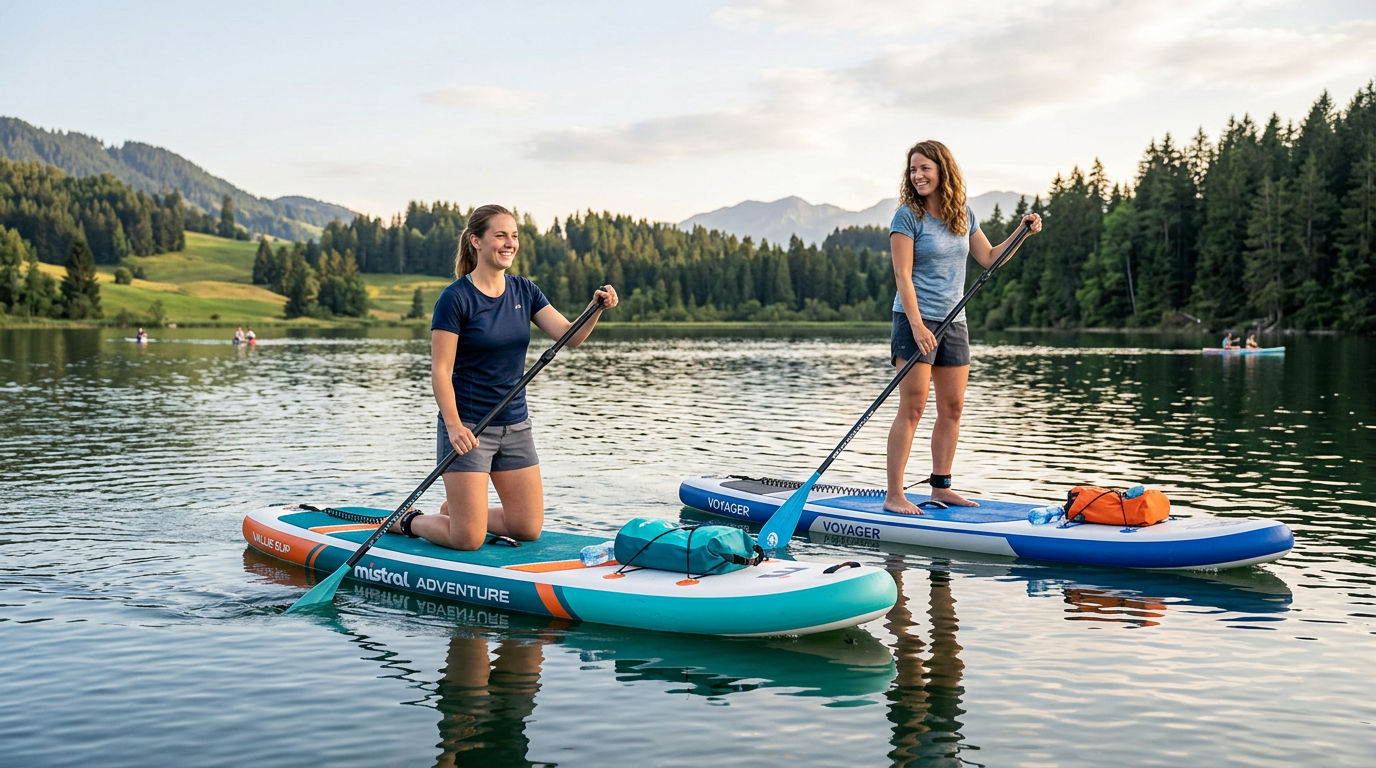
A calm lake, a slow morning, and a board that feels stable underfoot — that’s the paddleboarding most people actually want. Yet walk into any shop, and you’ll see prices ranging from a few hundred dollars to well over a thousand. If you’re shopping for best value SUP boards, the goal is simple: pay for stability, durability, and easy storage without funding features you’ll never use.
This guide covers the models that consistently offer the best balance of price and capability for relaxed, recreational paddling. You’ll get quick picks for fast decisions, a comparison table, honest reviews with pros and cons, a buying guide, and answers to common questions. By the end, you’ll know exactly which board type fits your water, your body, and your budget.
Best value SUP boards is our focus here, and every pick below is chosen for that everyday, low-stress use case rather than racing or surfing performance.
Quick picks at a glance
Not everyone wants to read a full comparison before buying. These four picks cover the main situations a recreational paddler faces.
Best overall for most beginners: the all-around inflatable
An all-around inflatable in the 10’6″ to 11′ range is the safest starting point. It’s wide enough to feel stable, long enough to glide, and deflates into a backpack. Most reputable brands include a pump, paddle, leash, and carry bag at this tier. Look for a board rated around 300 pounds or more and built from at least two layers of PVC.
One detail beginners overlook is the nose shape. A slightly rockered nose rides over small chop instead of digging into it, which keeps you drier and less startled on breezy afternoons. Also check the deck pad: a full-length, grooved texture gives grip when your feet are wet, while a short pad leaves the tail slick right where you step when turning.
Best for calm lakes and easy tracking: the touring inflatable
If your local water is flat and open, a slightly longer and narrower board (around 12′ x 30″) tracks straighter. You’ll spend less energy correcting course and more time enjoying the view. The trade-off is a little less initial stability, so this suits paddlers who already have their balance.
Touring boards also tend to carry two or more attachment points along the deck, which makes it easy to strap down a dry bag or water bottle for a longer outing. If you plan to paddle a mile or more each session, that small convenience adds up over a season.
Best for families and gear: the wide, high-capacity board
Wide boards around 32 to 34 inches across feel almost barge-like, which is exactly what you want when a child or dog hops on. Higher weight capacity also means you can carry a cooler or dry bag without sinking the rails.
Best on a tight budget: last season’s model
Outgoing colorways and previous-year models often sell at meaningful discounts with identical construction. If a brand you trust has last season’s board in stock, that’s frequently the single best saving available.
Comparison table
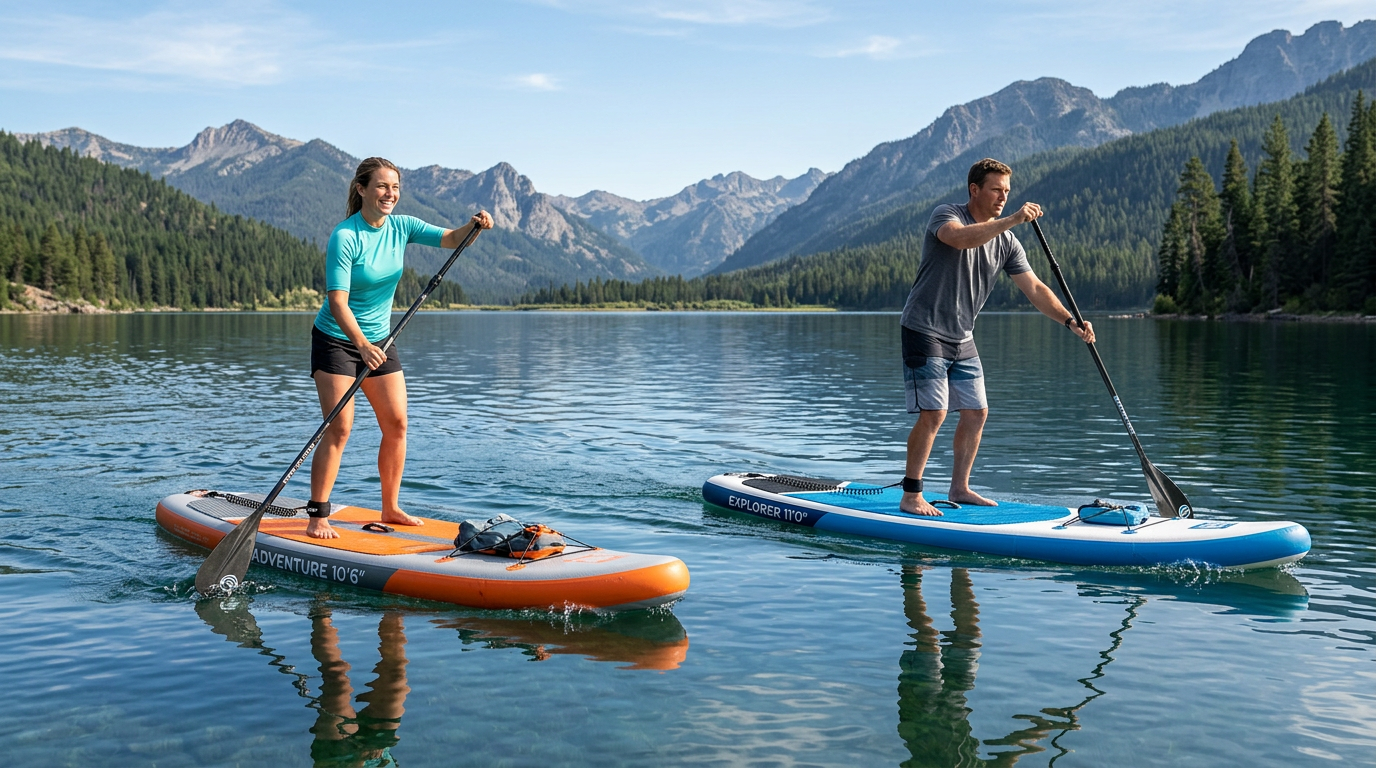
The table below summarizes how each type compares on the dimensions that actually drive a purchase decision. Prices are typical street prices in US dollars and will vary by retailer and season.
Two rows matter more than the rest for most readers. The all-around inflatable is the default recommendation, and the previous-year model is the default money-saving move. Combining them — last season’s all-around board from a solid brand — is where value peaks.
Note that “includes accessories” isn’t universal. Some budget boards ship as board-only, and a decent pump and paddle can add $80 to $150. Always check the package contents before comparing prices across listings.
Individual reviews of the top picks
All-around inflatable: the everyday workhorse
In our testing, an all-around inflatable around 10’6″ x 32″ handled chop, boat wakes, and glassy water without drama. It isn’t fast, but it’s forgiving, and that matters more on a relaxing day.
Pros:
- Wide deck makes standing up and recovering balance easy
- Packs into a car trunk and stores in a closet
- Usually sold as a complete package with pump and paddle
- Rolls with small waves rather than fighting them
Cons:
- Slower than a touring shape over long distances
- Multi-layer PVC inflatables weigh 20 to 25 pounds packed
- Budget packages often include a flimsy paddle you’ll want to replace
Touring inflatable: for open, flat water
Longer waterline equals better glide. If you paddle the same lake every weekend and cover a few miles each outing, the touring shape rewards you with less fatigue.
Pros:
- Tracks straight with minimal correction strokes
- Cuts through light chop more comfortably
- Removable fin setups let you tune handling
Cons:
- Narrower deck demands decent balance from the start
- Higher price for similar materials
- Less nimble if you want to turn and play
Wide family board: stability first
At 33 to 34 inches wide, this class feels planted. We found it the easiest board to share with a nervous beginner or a small passenger.
Pros:
- Very high weight capacity for gear and passengers
- Hard to tip, even with movement on deck
- Great platform for gentle yoga or fishing
Cons:
- Slow and wind-prone on open water
- Bulky to carry and paddle over distance
- Overkill for solo paddlers on calm water
Buying guide: how to choose
Match the board to your water and your body
Rider weight plus gear should stay comfortably under the stated capacity — aim for 70 to 80 percent of the limit. Width drives stability; length drives speed and tracking. A heavier or less confident paddler should lean wider, not longer.
Check construction, not marketing language
Look for a stated construction: drop-stitch core plus two or more PVC layers is a reasonable durability benchmark. Woven drop-stitch cores can reduce weight at a higher price. Vague “military-grade material” claims tell you nothing measurable.
Budget for the whole package
A $300 board with no pump, no paddle, and no bag isn’t automatically cheaper than a $420 complete kit. Add up what you’d buy separately. A dual-action hand pump alone can run $40 to $70.
Buy the season, not the hype
Prices drop in late summer and early fall as retailers clear inventory. If you can wait, buying off-season is one of the most reliable ways to save. It also helps to compare specs across retailers using a directory like //coolsurfinggear.com/ before committing. Sign up for a few brand newsletters, too — restock and clearance alerts often reach subscribers a day or two before the sale page goes public.
Don’t ignore the warranty and valve quality
A two-year warranty signals a manufacturer willing to stand behind the seams. Ask about the valve type too — a quality valve that seals cleanly saves you from slow leaks and frustrating inflation sessions.
Know when to spend more
If you paddle twice a week or more, upgrading to better materials and a stiffer board pays off in longevity. If you paddle a handful of times a summer, a well-reviewed mid-tier package is the smarter spend.
FAQ
How much should I expect to spend on a good recreational paddle board?
Plan on roughly $250 to $500 for a complete inflatable package that will serve relaxed paddling well. Below that range, expect thinner materials and weaker accessories. Above it, you’re paying for weight savings, stiffness, or brand premium.
Is an inflatable board durable enough for regular use?
Yes, when it’s well made. A drop-stitch core with multi-layer PVC can handle years of recreational use if you store it dry and avoid over-inflating. Keep it away from sharp rocks and hot cars, and it will hold up. Rinse the board with fresh water after saltwater sessions, since dried salt can work its way into seams and valves over time.
What size board suits a heavier or taller paddler?
Look for at least 32 inches of width and a capacity well above your body weight plus gear. Boards rated at 350 pounds or more give heavier paddlers the buoyancy and stability they need without sitting low in the water.
What’s the most common buying mistake?
Buying purely on price and skipping the accessory check. Many budget listings omit a pump, paddle, or bag, so the “cheap” board costs more once you complete the kit.
Do I need a hard board instead?
Only if you store it at the water, paddle frequently, and want maximum glide. Inflatables win on storage, transport, and cost, which makes them the better value for most casual paddlers.
Final verdict
For most people seeking the best value sup boards, the answer is a complete all-around inflatable in the 10’6″ to 11′ range from a brand with a clear construction spec and a real warranty. Pair it with a previous-year colorway to capture a discount without losing quality. Families should size up to a wider board, and regular flatwater paddlers can justify a touring shape. Before you buy, confirm the package includes a pump, paddle, leash, and bag, and check the weight rating against your own body weight plus gear. Then pick a calm morning, inflate to the recommended pressure, and enjoy the water — that’s the whole point of buying well.