A rider launches off a dirt jump, lands clean, and pedals away without a single gear shift. That moment captures what makes a BMX bike different from almost any other bicycle: simple, tough, and built for control rather than speed. If you have ever watched a skatepark session and wondered how those small bikes handle such big air, this guide is for you.
We will cover what a BMX bike actually is, why it matters for riders of all ages, and which habits separate smooth riders from frustrated ones. You will also learn the mistakes that cost beginners the most money and time, plus answers to the questions shoppers ask most.
By the end, you will know how to judge a bike’s fit, pick the right discipline, and ride with more confidence.
What is a BMX Bike?
A BMX bike is a compact, single-speed bicycle built for stunts, racing, and rough terrain rather than long-distance commuting. The name comes from bicycle motocross, a style of off-road racing that started in California in the early 1970s. Kids mimicked their motocross heroes on modified Schwinn Sting-Rays, and a new sport was born. By the 1980s, dedicated BMX brands and organized racing had taken hold, and BMX freestyle joined the Olympics in 2021.
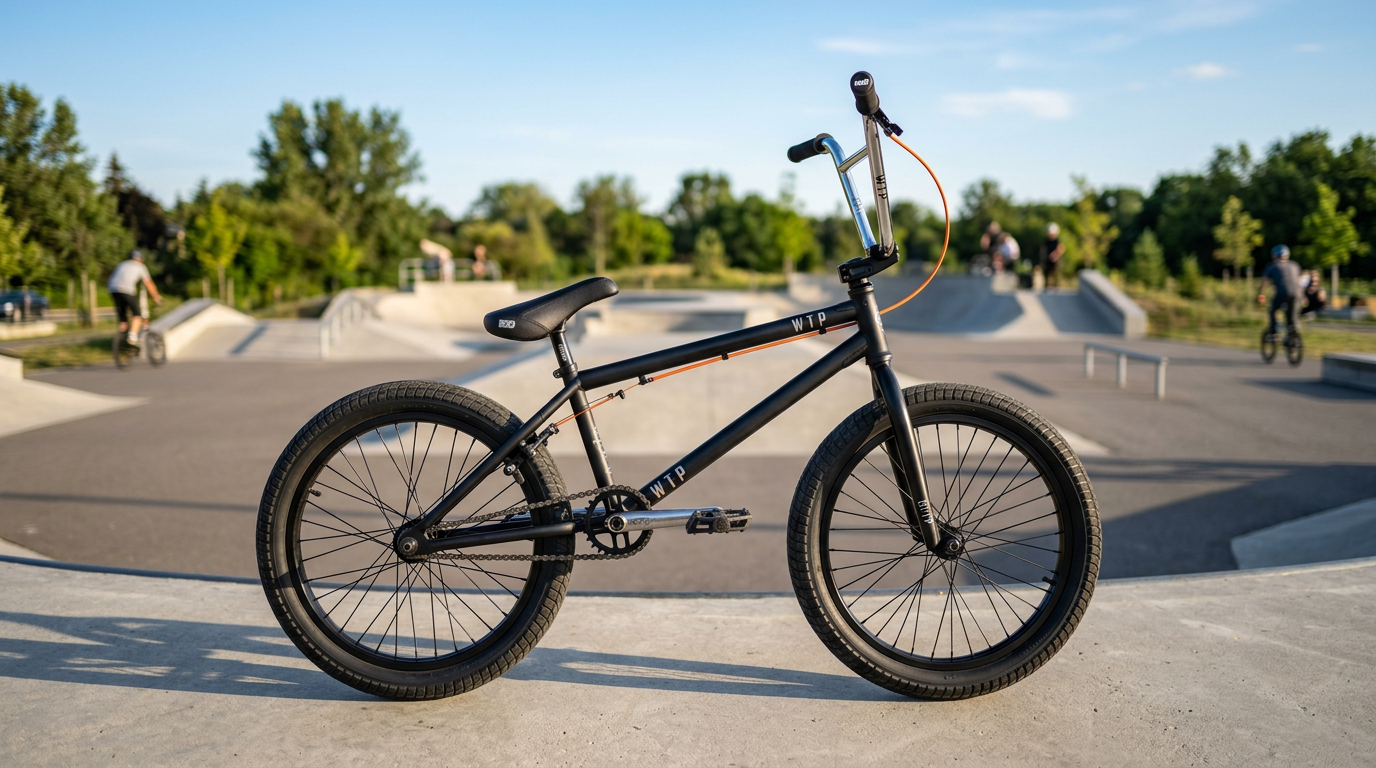
The hardware tells the story. A typical BMX bike has 20-inch wheels, a short wheelbase, a low standover height, and a frame made from high-tensile steel or chromoly. Most models run a single gear with a rear hand brake or a coaster brake. Freestyle models add a rotor or long brake cable so the handlebars can spin fully around.
The main styles of BMX bikes
Not every BMX bike is built for the same job. The four common categories are:
- Race: Lightweight frames, longer top tubes, and 20-inch wheels tuned for sprint speed on dirt tracks.
- Freestyle (park and street): Reinforced frames, four pegs, and geometry that favors spins and grinds.
- Dirt jumping: Longer suspension-free frames with stable angles for big jumps and smooth landings.
- Cruiser: 24-inch or 26-inch wheels for taller riders, casual cruising, and adult beginners.
Wheel size varies more than newcomers expect. Mini models for kids use 16-inch or 18-inch wheels, while standard adult BMX frames sit on 20-inch wheels. Cruisers stretch to 24 inches and beyond for comfort.
Frame materials and weight
In our testing, chromoly frames absorb impacts noticeably better than entry-level hi-tensile steel. They also weigh less, which matters when you are throwing the bike around. A complete chromoly freestyle bike typically weighs 24 to 27 pounds, while budget steel models can run 30 pounds or more.
The trade-off is price. Chromoly costs more up front, but it resists cracking at weld points, so it often lasts years longer under hard riding.
Takeaway: A BMX bike is a purpose-built machine. Match the style and frame material to how you plan to ride before you compare paint colors.
Why a BMX bike matters
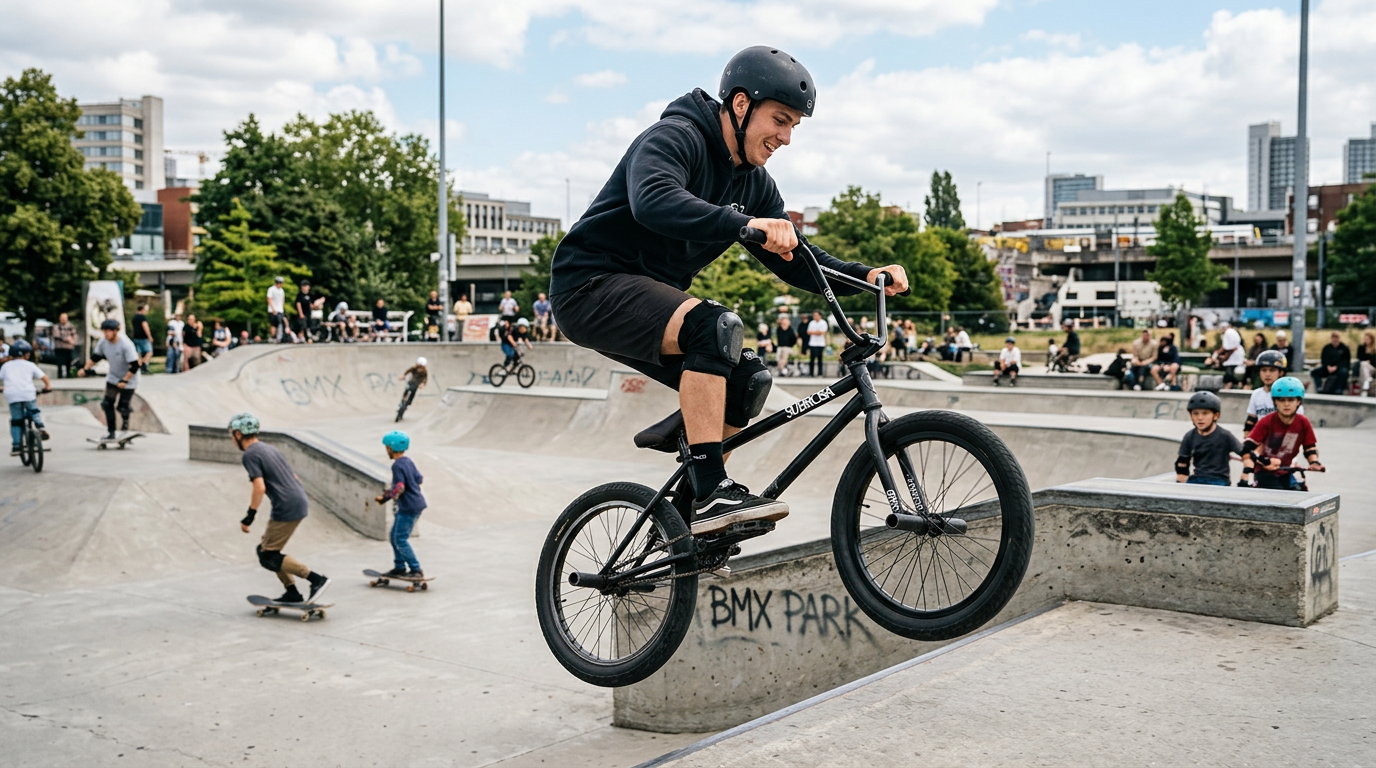
A BMX bike matters because it builds skills that transfer to almost any other cycling discipline. Balance, bike control, and spatial awareness improve fast when you practice tricks and jumps. Riders who start on BMX often find mountain biking and road riding easier because they already trust their handling instincts.
Skills and fitness benefits
BMX riding is a full-body workout disguised as play. Short sprints build leg power, while manuals and bunny hops demand core strength and coordination. A typical park session involves repeated bursts of effort, which trains anaerobic fitness more than steady endurance. In our experience, new riders notice better balance within a few weeks of regular practice.
Accessibility and cost of entry
Compared with road or mountain bikes, BMX is refreshingly affordable. A dependable beginner BMX bike costs roughly $250 to $500, and a quality chromoly model runs $500 to $900. Maintenance is simple because there are no derailleurs, suspension, or complex drivetrains to service.
Community and culture
BMX has a strong local scene in most towns. Skateparks, dirt tracks, and shop rides give beginners a place to learn from experienced riders. That social element keeps people riding, and it is one reason the sport has stayed vibrant for five decades.
There are honest limits, though. A BMX bike is not built for commuting long distances or hauling groceries. The single gear and small wheels make hilly rides tiring. It is also less forgiving on rough roads than a bike with suspension.
Takeaway: BMX delivers outsized value in skill development, fitness, and community. Just be clear that it complements other bikes rather than replacing them.
Best practices
Good habits make BMX safer and more fun. These are the practices we recommend to every new rider, whether they are buying a first bike or returning after years away.
Get the fit right first.
Standover height matters most. You should be able to straddle the frame with both feet flat and a couple of inches of clearance. Top tube length should match your height and riding style; a shorter tube suits technical street riding, while a longer tube helps on dirt jumps.
If you are unsure, visit a shop and sit on a few models. Ten minutes of testing prevents months of discomfort.
Choose the right discipline before you buy
Buying a race bike for park riding is a common and expensive mismatch. Race frames are light and less reinforced, so they crack under the repeated impacts of grinds and stair gaps. Freestyle frames are heavier but built to take abuse.
Decide where you will actually ride most weekends. Then buy a bike built for that surface.
Maintain the bike regularly.y
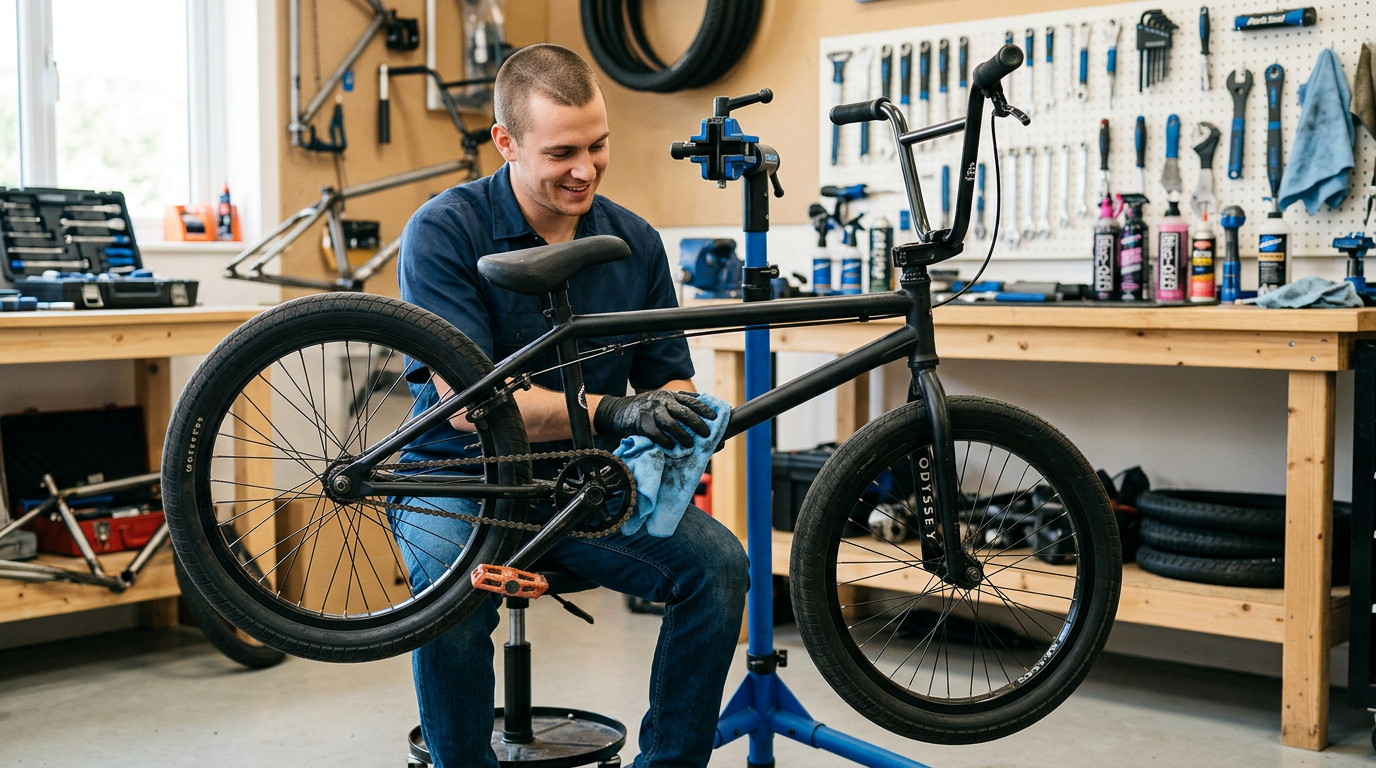
A BMX bike takes punishment, so check it often. We suggest a quick inspection before every session:
- Squeeze the tires and confirm pressure.
- Test both brakes for a firm, quick stop.
- Check that stem bolts and axle nuts are tight.
- Spin the wheels and listen for grinding bearings.
Clean and lubricate the chain monthly, and replace frayed brake cables immediately. Small checks prevent injuries and costly repairs.
Wear protective gear every session
Helmets are non-negotiable. Knee and shin pads save you from pedal strikes, and gloves improve grip on sweaty bars. Experienced riders sometimes skip pads, but beginners should not copy them. A single missed landing can cost weeks of riding.
Learn progression in order.
Master the basics before chasing tricks. Balance, braking, and a clean bunny hop form the foundation for everything else. Practice in a flat space, then move to small features. Riders who rush straight to jumps tend to stall out after their first crash.
Takeaway: Fit, discipline, maintenance, gear, and patient progression are the five pillars of a good BMX experience.
Common mistakes to avoid
Most BMX frustration traces back to a handful of avoidable errors. We have watched beginners repeat all of them, and each one costs money, time, or confidence.
Buying an oversized bike for a growing child
Parents often buy a bike the child will “grow into.” The result is a rider who cannot reach the ground or control the bars. Buy for the current fit, then upgrade in a few years. A properly sized bike teaches skills faster than a too-large one ever will.
Skipping the used-bike inspection
Used BMX bikes are great value, but hidden damage is common. Look closely at weld joints for cracks and check the frame for dents. Spin the wheels and feel for wobble. A cracked dropout can turn a bargain into scrap metal.
Overpaying for beginner features
New riders sometimes buy carbon parts or pro-level completes before they can ride them. That money is better spent on a solid chromoly frame and good tires. Upgrade components later, once you know what you actually need.
Neglecting the brakes
Some riders remove brakes for a cleaner look. That works for experts on flat ground, but beginners need stopping power. Keep both brakes working until your control is genuinely strong.
Riding beyond your skill level
Attempting a big stair set before mastering hops on flat ground is a fast route to injury. Progress in small steps. If a trick feels two levels above your current ability, it probably is.
Forgetting to check tire pressure
Low tires make the bike sluggish and damage rims on hard landings. High pressure improves speed but reduces grip. Check the sidewall rating and adjust for the surface. In our testing, a few PSI made a noticeable difference on ramps.
Takeaway: The biggest BMX mistakes come from mismatched equipment and impatience. Buy for the rider you are today and progress in order.
FAQ
How much should I spend on my first BMX bike?
Budget $250 to $500 for a dependable beginner bike. Spend closer to $500 if you want a chromoly frame that will last through real tricks. Avoid the cheapest options; their frames and bearings fail fast under regular riding.
Is a BMX bike suitable for adults?
Yes. Adult BMX riding is thriving, and cruiser models with 24-inch wheels suit larger riders well. Many adults ride park and street on standard 20-inch bikes. Fit and frame length matter more than age.
Can I use a BMX bike for commuting?
It works for short trips under a few miles, but it is not ideal. The single gear and small wheels make longer or hilly commutes tiring. Consider a hybrid or cruiser for daily transport instead.
What size BMX bike fits my height?
Riders under 5 feet usually fit 16-inch to 18-inch wheels. Most adults between 5 feet and 6 feet ride 20-inch wheels with a 20.5-inch to 21-inch top tube. Anyone taller should test a 21-inch or longer tube before buying.
How long does a BMX bike last?
A well-maintained chromoly bike can last a decade or more, even with regular park riding. Budget steel frames wear faster under hard impacts. Consistent cleaning and bearing checks extend any bike’s life significantly.
Conclusion
A BMX bike rewards riders who choose wisely and practice patiently. Focus on correct fit, pick a bike built for your discipline, and protect yourself with gear every session. Maintain the machine regularly, and progress in small steps rather than chasing big tricks too early.
Your next step is simple: measure your standover height, decide where you will ride most, and test a bike in person. If you are buying used, inspect the welds closely and budget for a professional tune-up. Do that, and you will spend far more time riding than repairing.